[email protected]

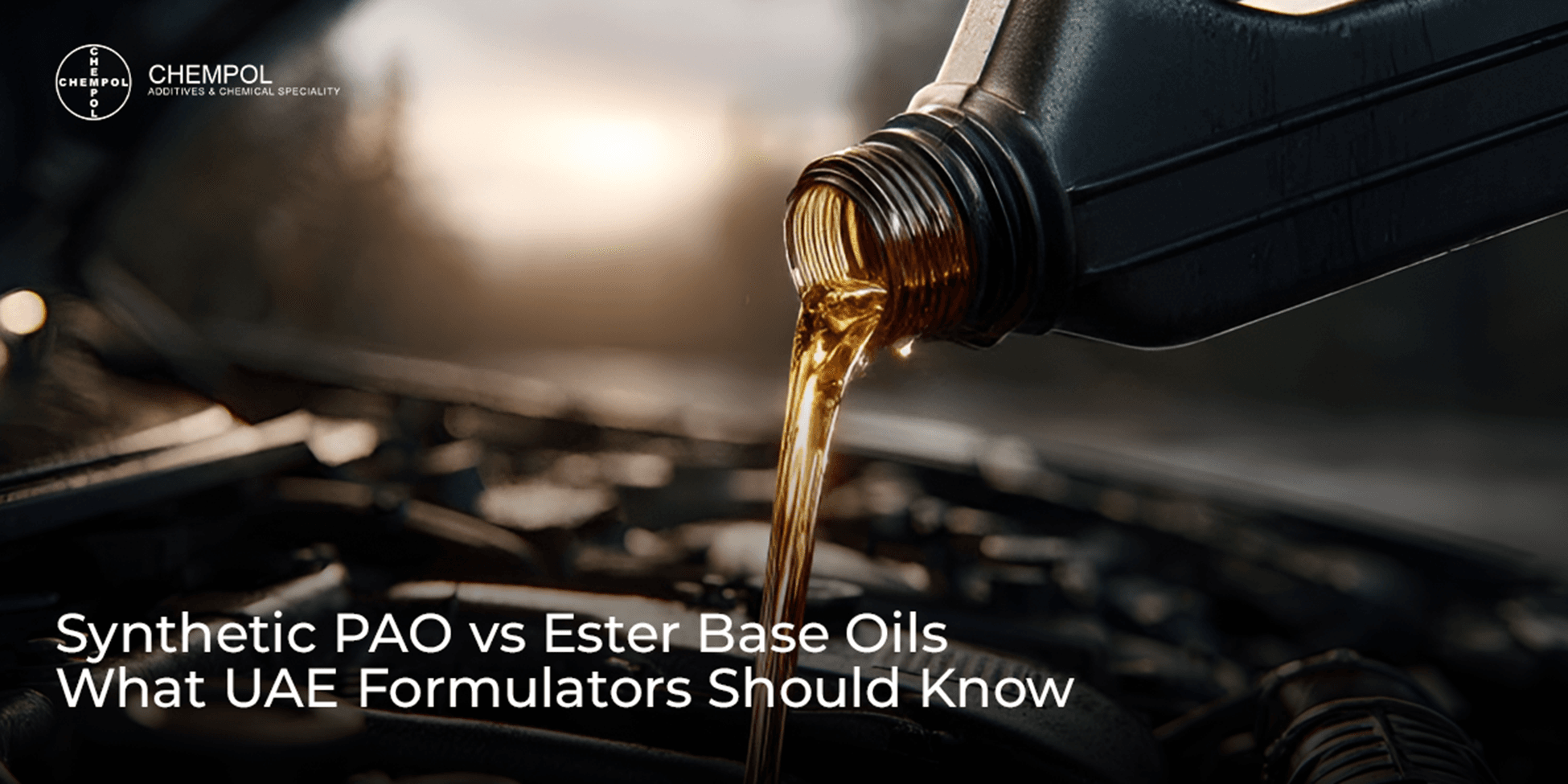
Synthetic PAO vs Ester Base Oils — What UAE Formulators Should Know
Formulators in the UAE face new challenges every year as modern engines are operating under heavier loads. Heat levels are getting higher as the performance requirements are going up. Drivers are asking for long oil life and smooth performance. All these factors are putting increasing pressure on lubricant blends. That is why base oils have to be stronger than ever. Nowadays, many formulators are considering using synthetic base oil in UAE to produce blends that can withstand stress and high temperatures. These base oils meet the requirements of new engines by helping reduce wear and enabling the engine to run at higher speeds.
PAO and ester oils are the go-to choices for top-grade blends. They are both synthetic and provide excellent heat control and low viscosity. Additionally, their behaviour changes once they are inside the engine. Any formulator working in this region should be aware of these differences and changes. They should know how these oils operate, how they take heat and load, and how they interact with modern additive packs. When they are familiar with these properties, they can formulate blends that meet local needs and climate standards.
In this article, we will discuss some of the important factors and differences between Synthetic PAO vs Ester Base Oils. This will allow the formulator to make better formulations for the foreseeable future.
PAO Oils and Their Role in the Region
PAO oils are known for their clean structure and stable behaviour. They resist heat better than most other base oils. They also flow with ease when the engine is cold. In a climate where heat rises fast, and engines face quick changes in speed, PAO helps keep things stable. These oils do not thicken or burn off with ease. They stay smooth, even when engines operate for long hours.
Many formulators also enhance PAO blends with PAO based oil additive products. These additives help keep the film strong under load. They improve wear control and reduce friction inside the engine. The additive also helps keep the blend stable when heat levels rise. This improves long-term performance.
PAO oils do not have natural polarity. Because of this, they do not stick to metal surfaces as much as ester oils. This is why additives matter. When the right additive is added, PAO oils can deliver a very strong film. They also help reduce engine noise. This is useful in large SUVs and heavy-duty engines that work in desert zones.
Ester Oils and Their Unique Traits
Ester oils act in a different way. These oils have natural polarity. They attach to metal surfaces with ease. This helps the engine on start-up. A thin oil film stays in place and protects metal parts from dry wear. For engines that start and stop often, this trait is very useful. It reduces stress on the top parts of the engine.
Many formulators source ester base oil to build high-performance oils. Ester oils bring strong solvency. This means they can clean engines better. They break down dirt, soot, and varnish. Engines that use ester-rich blends stay clean for longer. This is helpful for turbo engines and high-speed engines.
Ester oils also resist heat in a strong way. They do not oxidise fast. They reduce burn-off and help the oil stay thick enough for protection. This is ideal for desert use. It is also ideal for engines that carry heavy loads. Racing blends also use esters because the oil does not fail when the temperature rises at high speeds.
Comparing PAO and Ester Oils in Real Use
Both PAO and ester oils protect engines well. Both deliver smooth flow. Both handle heat better than most other base oils. But they work in different ways. PAO offers stability. Ester offers a strong grip and cleaning power.
PAO stays stable under extreme heat. It does not break down fast. It does not form sludge with ease. This works well in long drives and heavy-use vehicles. Ester oils hold on to metal and clean the engine better. They are good for engines that face more soot and burn more fuel.
Many UAE formulators choose blends that combine both. PAO brings a long life. Ester brings grip and cleaning. Together, they make a strong blend. When tuned with additives, these blends protect engines even under heat, dust, and load. The mix also reduces oil burn-off and lowers deposit levels.
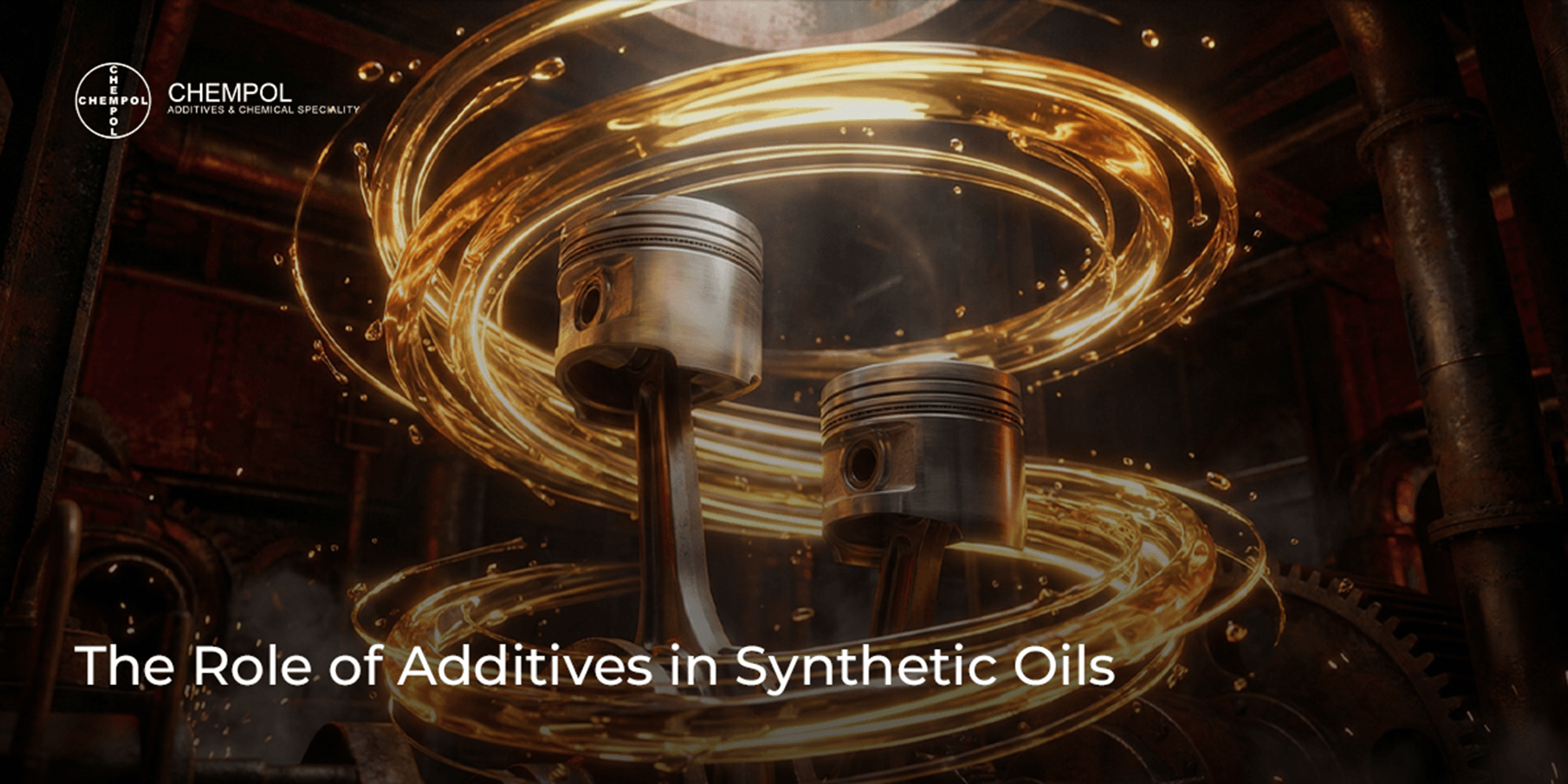
The Role of Additives in Synthetic Oils
Additives shape the final performance of any blend. Even the best base oil needs support. This is why many lubricant blending plants use synthetic oil additive packs in the UAE. These additives keep the oil cool by resisting oxidation. They are the ones that stop wear. They also help in blocking sludge. Moreover, they assist in foam control and heat flow.
In addition, additives enable the formulator to develop blends for new types of engines. Turbos need more cleaning because of the extra air. Diesel engines require better soot control. Engines operating under high-load conditions experience film-strength issues. Additives make the blend perfect for each requirement.
Nowadays, quite a few motorists also want the best synthetic oil additive for their own use. These additives can infuse older oils with new life. They maintain the engine in good condition and keep it clean. Older vehicle users, in particular, are searching for synthetic oil additives for high-mileage engines, as these additives help prevent oil burning and assist in sealing worn rings. Drivers who want to achieve peak performance also choose full synthetic oil additive products, as these help maintain the film's integrity even under stress by thickening it.
How UAE Formulators Should Choose Between PAO and Ester Oils
The right base oil type depends on the engine group, fuel type, load level, and climate. PAO gives a smooth flow and long service life. Ester gives a strong grip and high heat tolerance. Blending both can deliver the best balance.
If the engine works under heat and load, PAO helps with stability. If the engine builds soot or faces fast speed shifts, ester helps keep parts clean and protected. Formulators working in the UAE must also consider fuel type. Diesel engines in the region often generate more soot. This means ester oils or ester-rich blends may be useful.
But cost matters too. Pure ester blends cost more. PAO blends cost less. Many formulators choose hybrid blends. They mix a bit of ester with PAO. This gives more grip and cleaning at a fair price.
Why This Knowledge Matters for the UAE Market
New engines operate under greater stress than older ones. They need oils that stay strong at high heat and last longer. They need oils that support low-emission goals. They need blends that can face dust, sand, load, and heat. Synthetic oils meet these needs.
This is why more companies in the region now rely on synthetic blends. They need oils that can handle stress. PAO and ester base oils give them the tools to build such blends. Additives help tune the final mix.
The UAE has a fast-growing auto market. Engines are getting stronger. Roads are getting busier. The climate is not getting cooler. This makes the choice of base oil even more important.
Chempol Additives: Offering Quality Synthetic Base Oil in the UAE
Chempol is a leading name in advanced lubricant science and one of the most reliable. The brand provides UAE-based formulators with premium base oils, potent additive packs, and extensive technical knowledge. With Chempol, the blending facilities can produce oils that resist high temperatures, dust, vibration, and long trips. Its products facilitate formulators in preparing blends with PAO, ester, and mixed synthetic systems.
Chempol also allows the creation of custom additive packages compatible with new engines. A formulator requiring stability, cleaning action, film strength, or heat resistance can find a tailored solution at Chempol. Their support team guides the journey, from conception to the final blend, ensuring the product aligns with market objectives and meets standards. Each Chempol formulator can leverage robust tools and science to architect future synthetic oils.